
Volume I
The Technology of Love
Although Love is a primary essence of human living, it has always been a difficult subject to study. Scholars and researchers up to modern times have generally held that Love is a much too subjective experience to be the target of serious scientific scrutiny. The author challenges this tradition by taking the reader on an excursion of Love like no other ever attempted… subjecting Love to a totally new rigorous analysis to see if Love is “just” another subjective-emotional “interpretation” of experience by us humans – or does Love qualify as a “more objective” and scientifically valid phenomenon? If so, how could such scientific validity be demonstrated? Can Love stand up to the approaches that our scientific methods afford us as we penetrate deeper and deeper into the nature of our Universe?
Love as a “technology” was first proposed by sociology Professor Pitirim Sorokin of Harvard in the 1950s, but it is generally accepted that he failed to define Love as such and never completed a “scientific” foundation for the subject. This book is a major step in completing the work that he started. In fact, it surely goes beyond what Sorokin or more recent scholars have anticipated for Love… defining Love’s “components” and how they can be applied in daily living, and offering Love’s first scientific foundation in the process.
This book is for the general reader but scholars of David Hume, Adam Smith, Charles Peirce, Sigmund Freud, John Rawls, Jesus, and Einstein (among others) will find themselves “challenged” by the author’s provocative thesis and analyses.
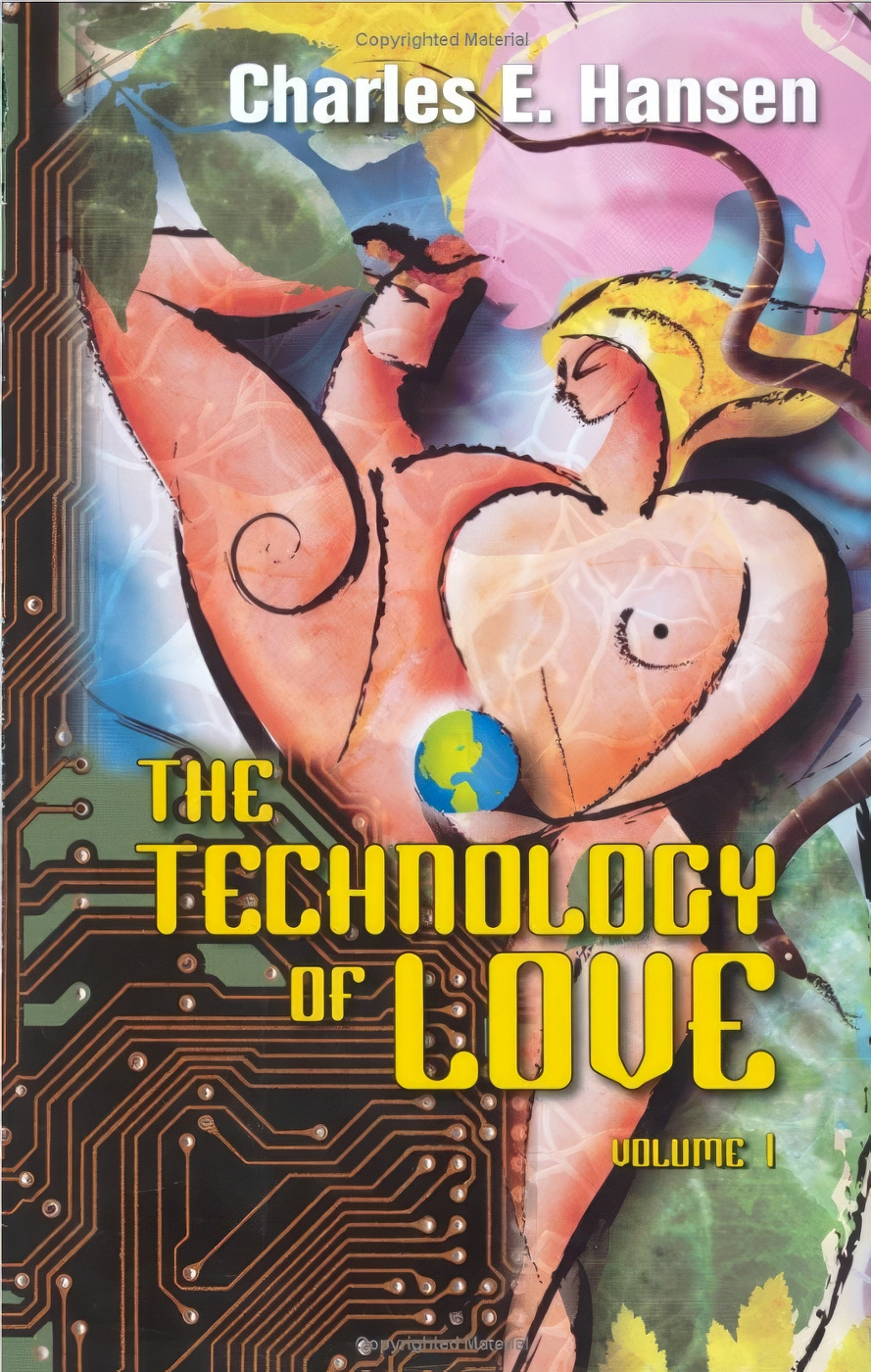
The Technology of Love, Volume I
WHAT HOLD DOES LOVE HAVE ON US?
Why will Love be the most important technology of the future? Why is a love-dominated world no longer an idealist’s dream? Can Love actually be deliberately produced ? This book offers the remarkable case based on science.
“According to Freud, ‘Love holds everything in the world together.’ In his last major work Freud held that our whole world civilization will eventually be dominated by Love, not Justice; and he was writing of Love or Eros in its broadest sense, not just “sexual love” with which he is generally identified. Here is the beginning blueprint for this endeavor. And if we don’t start world-wide and soon, Freud will also be correct: we will need to keep building more prisons and fencing more borders, eventually even our own neighborhoods.”
The Technology of Love, Volume I
IS THE UNIVERSE HARD-WIRED FOR LOVE?
“The greatest enterprise of the mind has always been and always will be the attempted linkage of the sciences and humanities. The ongoing fragmentation of knowledge and the resulting chaos in philosophy are not reflections of the real world but artifacts of scholarship.” -Edward O. Wilson
Learn why such linkage is now possible, practical and scientific.
What happens when we subject Love to scientific methods? The results may shock even staunch sociobiologists and will surely jolt those who hold to an unbridgeable chasm between Science and morality, or between Science and Religion.
The Technology of Love, Volume I
IS LOVE A TECHNOLOGY TO UNITE US?
“Could this be what billions have hoped for—and not a few still fear? The formal beginning of the unequivocal ascendancy of Love over all domains of human endeavor including, with the help of Science, Science itself.”
“This makes Love simple enough to teach in elementary schools, yet comprehensive and challenging enough to be studied at our universities. From now on, every human can know exactly how to generate Love.”
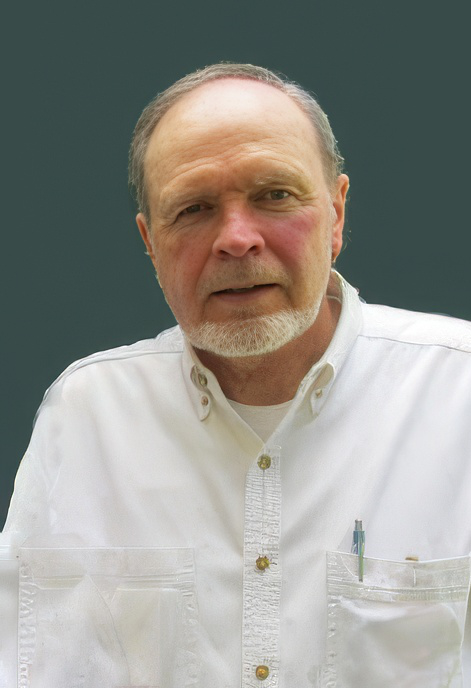
Charles E. Hansen
Special Acknowledgements
The author gratefully acknowledges the following individuals who have been most directly associated with this project. Wesley L. Tennant for his research assistance; sister Elaine Hansen McLellan for her encouragement and assistance in preparing the notes and references, the bibliography, the complete final manuscript and all the detail work associated with publication; nephew Sean P. McLellan for his assistance with the computers and associated web site; Franklin “Chuck” Spinney for the many discussions and his research/study suggestions; Michael K. Kiya for his encouragement and great kindness in keeping all the research library and documents, computers, and records secure in a prime room of his Virginia townhouse for 2½ years while I recovered from an illness; George Bakelaar for his research references; Michael E. Burns for the discussions, especially in the early days; Dr. Jeanne A. Hull for studying philosophy with me; sister Carol Hansen Dussault for her encouragement, review, suggestions, and assistance; William A. McCulloch for his review of the manuscript and his suggestions; and Roland M. “Zeke” Zeender for inspiration and his encouragement throughout the life of this project.
